Blog
Salvia-divinorum-Salvinorin-A-Vape-Cart-1g
Feb
Salvia-divinorum-Salvinorin-A-Vape-Cart-1gThe Definitive Guide to Salvia Divinorum and Salvinorin A: Science, Safety, and Legal Considerations
Introduction: Understanding a Unique Psychoactive Plant
Salvia divinorum, a perennial herb native to the cloud forests of the Sierra Mazateca region in Oaxaca, Mexico, occupies a unique and often misunderstood position in the landscape of psychoactive plants. Unlike classical psychedelics such as psilocybin or LSD, Salvia divinorum and its primary active compound, Salvinorin A, operate through an entirely distinct pharmacological mechanism—one that produces effects described as fundamentally different from any other known substance.Salvia-divinorum-Salvinorin-A-Vape-Cart-1g
This comprehensive guide provides an evidence-based, educational examination of Salvia divinorum, Salvinorin A, and the modern technological application of these compounds in vaporization devices. Our purpose is strictly educational: to present the scientific, legal, and safety realities surrounding this unusual plant and its constituents. We aim to equip readers with factual information to navigate a topic often shrouded in misinformation and sensationalism.Salvia-divinorum-Salvinorin-A-Vape-Cart-1g
Critical Disclaimer: This article is for informational and educational purposes only. Salvinorin A and Salvia divinorum extracts are controlled substances or regulated compounds in many jurisdictions. This content does not endorse, encourage, or facilitate illegal activity. The mention of specific quantities (such as 1 gram) serves to illustrate dosage concepts and safety considerations, not to normalize or promote possession or use. Always consult legal and medical professionals regarding questions about controlled substances.Salvia-divinorum-Salvinorin-A-Vape-Cart-1g
Part One: Understanding Salvia Divinorum – The Plant Itself
Botanical Classification and Identification
Salvia divinorum belongs to the Lamiaceae (mint) family, making it a relative of culinary sage, rosemary, and mint. Its taxonomic classification is as follows:
- Kingdom: Plantae
- Clade: Angiosperms
- Clade: Eudicots
- Order: Lamiales
- Family: Lamiaceae
- Genus: Salvia
- Species: S. divinorum
Physical Characteristics:
- Large green ovate leaves (10-30 cm in length)
- Hollow square stems (characteristic of the mint family)
- White flowers with purple calyces
- Salvia-divinorum-Salvinorin-A-Vape-Cart-1g
- Prefers humid, shaded environments
- Rarely produces viable seed in cultivation
Historical and Cultural Context
Indigenous Use:
The Mazatec people of Oaxaca have employed Salvia divinorum in traditional healing ceremonies for centuries, referring to it as:Salvia-divinorum-Salvinorin-A-Vape-Cart-1g
- “Ska María Pastora” (Leaf of Mary the Shepherdess)
- “Hierba María” (Mary’s Herb)
- “La Pastora” (The Shepherdess)
Traditional use differs markedly from contemporary patterns:Salvia-divinorum-Salvinorin-A-Vape-Cart-1g
- Administration by shamans (curanderos) in controlled ceremonial contexts
- Typically consumed as fresh leaves chewed or macerated into liquid
- Used for divination, healing, and spiritual guidance during altered states
- Never traditionally smoked or vaporized
- Salvia-divinorum-Salvinorin-A-Vape-Cart-1g
- Part of a broader Mazatec healing tradition including psilocybin mushrooms
- Salvia-divinorum-Salvinorin-A-Vape-Cart-1g
Discovery by Western Science:
- 1939: First documented by anthropologist Jean Basset Johnson
- 1962: R. Gordon Wasson and Albert Hofmann expedition to Oaxaca
- 1962: First botanical specimens brought to Western science
- 1982: Alfredo Ortega and colleagues isolate Salvinorin A
- 1994: Daniel Siebert identifies Salvinorin A as the primary psychoactive compound
Cultivation and Propagation
Salvia divinorum is almost exclusively propagated through vegetative cuttings:
Growing Requirements:
- High humidity (60-80%)
- Indirect light (forest floor conditions)
- Temperatures between 60-80°F (15-27°C)
- Well-draining, nutrient-rich soil
- Protection from wind and direct sun
Conservation Status:
While not formally assessed by IUCN, habitat loss in its native range and reliance on vegetative reproduction make wild populations vulnerable. Most plants in circulation derive from a few original specimens.Salvia-divinorum-Salvinorin-A-Vape-Cart-1g
Part Two: Salvinorin A – The Unique Pharmacological Agent
Chemical Structure and Properties
Salvinorin A (C₂₃H₂₈O₈) is a neoclerodane diterpene—structurally unlike any other known psychoactive compound:Salvia-divinorum-Salvinorin-A-Vape-Cart-1g
Molecular Characteristics:
- Molecular Weight: 432.47 g/mol
- IUPAC Name: Methyl (2S,4aR,6aR,7R,9S,10aS,10bR)-9-acetyloxy-2-(furan-3-yl)-6a,10b-dimethyl-4,10-dioxo-2,4a,5,6,7,8,9,10a-octahydro-1H-benzo[f]isochromene-7-carboxylate
- Melting Point: 238-240°C
- Solubility: Highly lipophilic, soluble in organic solvents, poorly soluble in water
- Stability: Relatively stable when stored properly (cool, dark, dry conditions)
Unique Features Among Psychoactives:
- Non-alkaloidal: Unlike virtually all other plant-based psychedelics (psilocybin, mescaline, DMT), Salvinorin A is not an alkaloid
- Non-nitrogenous: Contains no nitrogen atoms in its structure
- KOR Agonist: Functions as a selective kappa-opioid receptor agonist
- No 5-HT₂A Activity: Does not significantly interact with serotonin receptors
Pharmacological Mechanism of Action
Kappa-Opioid Receptor Agonism:
Salvinorin A’s primary mechanism is potent, selective agonism of the kappa-opioid receptor (KOR). This distinguishes it fundamentally from:
| Substance Class | Primary Receptor | Examples |
|---|---|---|
| Classical Psychedelics | 5-HT₂A serotonin | Psilocybin, LSD, DMT |
| Cannabinoids | CB1/CB2 | THC, CBD |
| Opioids | Mu-opioid | Morphine, heroin |
| Salvinorin A | Kappa-opioid | (Unique) |
KOR Activation Effects:
- Dysphoria in many contexts (though not universally)
- Altered perception of reality
- Depersonalization and derealization
- Disruption of spatial and temporal processing
- Antinociceptive (pain-relieving) effects
- Modulated dopamine transmission
Receptor Binding Profile:
- EC₅₀: Approximately 2.1 nM at human KOR
- 1000-fold selectivity for KOR over other opioid receptors
- No significant affinity for serotonin, dopamine, or other common receptor sites
- Partial agonist activity at some KOR subtypes
- Salvia-divinorum-Salvinorin-A-Vape-Cart-1g
Pharmacokinetics
Absorption:
- Oral: Poorly bioavailable due to first-pass metabolism (traditional quid method uses buccal absorption)
- Sublingual/Buccal: Effective with prolonged mucosal contact
- Inhalation/Vaporization: Highly bioavailable, rapid onset
- Onset: 30 seconds to 1 minute (vaporized); 5-10 minutes (buccal)
- Peak Effects: 2-5 minutes (vaporized); 30-60 minutes (buccal)
- Duration: 5-15 minutes (vaporized); 45-90 minutes (buccal)
Metabolism:
- Rapidly metabolized by esterases in blood and liver
- Primary metabolite: Salvinorin B (inactive or significantly less active)
- Half-life: Approximately 30-60 minutes
Dosage Parameters (Vaporized Salvinorin A):
| Dose Level | Amount (mg) | Effect Profile |
|---|---|---|
| Threshold | 0.1-0.2 mg | Subtle perceptual shifts, body awareness |
| Light | 0.2-0.5 mg | Mild visual alterations, beginning reality disruption |
| Common | 0.5-1.0 mg | Full psychedelic effects, significant reality alteration |
| Strong | 1.0-1.5 mg | Intense dissociation, contact with “entities” or “forces” |
| Heavy | 1.5-2.5 mg+ | Complete ego dissolution, amnesia possible |
Contextualizing 1 Gram (1000mg):
One gram of Salvinorin A represents:
- 1,000-2,000+ standard doses
- A quantity inconsistent with personal use
- Significant legal jeopardy (presumption of intent to distribute)
- Extreme potency requiring meticulous handling and measurement
Part Three: Vaporization Technology and Salvinorin A
The Challenge of Effective Administration
Salvinorin A presents unique challenges for reliable administration:
Obstacles to Consistent Effects:
- Thermal Sensitivity: Salvinorin A degrades at temperatures exceeding 240-250°C
- Dose Precision: Active doses measured in micrograms to low milligrams
- Rapid Metabolism: Extremely short duration requires efficient delivery
- Poor Oral Bioavailability: Traditional methods inefficient by modern standards
- Salvia-divinorum-Salvinorin-A-Vape-Cart-1g
Evolution of Vaporization Methods
Historical Progression:
1. Traditional Mazatec Method:
- Fresh leaves chewed and held in mouth (15-30 minutes)
- Buccal absorption through oral mucosa
- Slower onset, longer duration, gentler curve
- Difficult to quantify dosage precisely
2. Dried Leaf Smoking (1990s-2000s):
- Dried leaves smoked in pipes or bongs
- Inefficient (requires 100-500mg+ for effects)
- Harsh on respiratory system
- High combustion temperature degrades compound
- Inconsistent results
3. Enhanced Leaf/Extracts (2000s-2010s):
- Leaf material infused with concentrated Salvinorin A
- Labeled as 5x, 10x, 20x (concentration multipliers)
- Still subject to combustion inefficiency
- Better consistency but variable quality control
4. Vaporization Technology (2010s-Present):
- Precise temperature control (optimal: 220-240°C)
- Efficient compound delivery
- Minimal respiratory irritation
- Consistent, reproducible effects
Vaporizer Device Considerations
Device Requirements for Salvinorin A:
Essential Features:
- Temperature Control: Adjustable heating in 220-240°C range
- Chamber Design: Appropriate for small quantities (powder)
- Airflow: Adjustable to control vapor density
- Material Safety: Food-grade components, no off-gassing
- Salvia-divinorum-Salvinorin-A-Vape-Cart-1g
Device Types:
| Device Category | Suitability | Advantages | Limitations |
|---|---|---|---|
| Convection Herb Vaporizers | Moderate | Even heating, no combustion | Designed for plant material |
| Conduction Vaporizers | Moderate | Direct heating, efficient | Hot spots possible |
| E-liquid Vaporizers | Limited | Precise dosing if formulated | Solubility challenges |
| Concentrate/Enail Devices | High | Excellent temp control | Technical knowledge required |
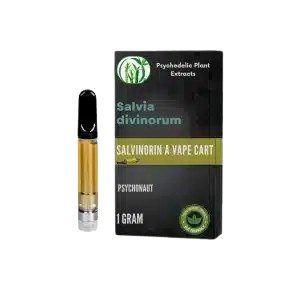
The Challenge of Cartridge Formulations
Creating stable, effective vape cartridges for Salvinorin A presents significant technical hurdles:Salvia-divinorum-Salvinorin-A-Vape-Cart-1g
Formulation Obstacles:
- Solubility: Salvinorin A has limited solubility in common vape carrier liquids (PG/VG)
- Stability: May precipitate out of solution over time
- Uniformity: Ensuring consistent concentration throughout the cartridge
- Dosing: Microgram-level precision nearly impossible with variable puff topography
Safety Concerns with Unregulated Cartridges:
- Unknown carrier liquids (potentially toxic when vaporized)
- No quality control or purity verification
- Inaccurate concentration labeling
- Potential adulteration with other compounds
- Salvia-divinorum-Salvinorin-A-Vape-Cart-1g
- No child-resistant or safety packaging requirements
Part Four: Effects and Subjective Experience
Phenomenology of the Salvinorin A State
The Salvinorin A experience is described as fundamentally distinct from classical psychedelics:Salvia-divinorum-Salvinorin-A-Vape-Cart-1g
Core Characteristics:
1. Reality Replacement:
Rather than altering perception of existing reality, users often report complete replacement of consensus reality with alternate, autonomous realities. This is not experienced as hallucination (seeing things that aren’t there within the room) but rather as being transported elsewhere.Salvia-divinorum-Salvinorin-A-Vape-Cart-1g
2. Loss of Personal Identity:
- Ego dissolution that is often more complete than with other substances
- Amnesia regarding being a human who consumed a substance
- Inability to recognize one’s body or personal history
- Complete identification with alternate states of being (objects, concepts, forces)
3. Interaction with “Entities”:
- Contact with intelligent presences, beings, or forces
- Often described as guides, teachers, or custodians of other realities
- Interactions may be benevolent, neutral, or indifferent
- Communication often non-verbal, telepathic, or conceptual
4. Physical Sensations:
- Pulling, twisting, stretching, or folding sensations
- Feelings of being pulled through surfaces or orifices
- Complete loss of proprioception
- Sensations of becoming two-dimensional or multi-dimensional
5. Emotional Spectrum:
- Highly variable; not inherently dysphoric despite reputation
- Can range from profound peace to terror
- Often described as emotionally neutral or “beyond emotion”
- Post-experience appreciation for consensus reality
The Dose-Response Continuum
Threshold-Light (0.1-0.5mg vaporized):
- Subtle body awareness shifts
- Slight visual “brightness” or texture enhancement
- Mild spatial disorientation
- Easily ignored; non-intrusive
Common-Moderate (0.5-1.0mg vaporized):
- Clear reality alteration begins
- Surfaces may ripple, breathe, or become layered
- Feeling of presence or “other” in the room
- Loss of ability to read or process complex information
- Recognizable as an altered state; still oriented to being a person
Strong-Breakthrough (1.0-1.5mg+ vaporized):
- Complete transport to alternate reality
- Total loss of connection to physical body
- Amnesia regarding ordinary life
- Contact with autonomous realities and entities
- Experience perceived as fully real, not “like a dream”
- Variable memory after return
Set, Setting, and Salvinorin A
The importance of preparation and environment cannot be overstated:
Preparation Imperatives:
- Sober Sitter: Absolutely essential; user cannot care for themselves
- Safe Environment: Comfortable seating/reclining position, no hazards
- No Responsibilities: Minimum 1-2 hours completely free
- Intention Clarity: Understanding the intensity and surrendering to experience
- Integration Plan: Time and support for processing afterward
Contraindications:
- Personal or family history of psychotic disorders
- Severe anxiety or panic disorders
- Inability to surrender control
- Unsupportive or chaotic environment
- Mixing with other substances (particularly cannabis or stimulants)
Part Five: Legal Status and Regulatory Landscape
International Legal Status
United Nations:
Salvinorin A and Salvia divinorum are not currently scheduled under the UN Convention on Psychotropic Substances, though several member states have implemented national controls.Salvia-divinorum-Salvinorin-A-Vape-Cart-1g
Country-Specific Status:
| Country | Status | Penalties |
|---|---|---|
| United States | Not federally scheduled; several state bans | State-level: Misdemeanor to felony |
| Australia | Schedule 9 (Prohibited substance) | Severe criminal penalties |
| Canada | Not scheduled; import controlled | Regulatory seizures possible |
| Denmark | Illegal | Fines, imprisonment |
| Germany | Not scheduled; regulated as “medicinal product” | Regulatory actions |
| Italy | Illegal | Criminal penalties |
| Japan | Illegal | Strict enforcement |
| Mexico | Legal for traditional use; commercial sale restricted | Protected indigenous context |
| Netherlands | Not scheduled; grey area | Regulatory actions increasing |
| Spain | Not scheduled | Permissive, but unregulated |
| Sweden | Illegal | Criminal penalties |
| United Kingdom | Illegal (Psychoactive Substances Act 2016) | Up to 7 years imprisonment |
United States State-by-State Status
While not federally scheduled, numerous states have enacted specific bans:Salvia-divinorum-Salvinorin-A-Vape-Cart-1g
States with Explicit Bans:
Alabama, Delaware, Florida, Hawaii, Illinois, Iowa, Kansas, Kentucky, Louisiana, Maine, Michigan, Minnesota, Mississippi, Missouri, Nebraska, New Jersey, New York, North Carolina, North Dakota, Ohio, Oklahoma, Oregon, Pennsylvania, South Carolina, South Dakota, Tennessee, Texas, Utah, Virginia, West Virginia, Wisconsin, Wyoming Salvia-divinorum-Salvinorin-A-Vape-Cart-1g
States with Pending Legislation or Grey Status:
Remaining states have no specific Salvia ban, though analogues or general drug laws may apply.
Important Note: Even in states without specific bans, sale for human consumption, possession with intent to distribute, or analogue act considerations may create legal jeopardy.Salvia-divinorum-Salvinorin-A-Vape-Cart-1g
Regulatory Trends
Increasing Restrictions:
- Growing number of state-level bans in the U.S.
- UK Psychoactive Substances Act (2016) broad prohibition
- Australian poisons scheduling
- Japanese strict enforcement
Limited Protections:
- Traditional indigenous use recognized in Mexico
- Religious use not legally established (unlike peyote for NAC)
- Research use possible with appropriate licensing
Part Six: Research and Therapeutic Potential
Current Scientific Understanding
Limited Clinical Research:
Despite its unique pharmacology, Salvinorin A research remains constrained by:
- Scheduling and regulatory barriers
- Stigma associated with its reputation
- Short duration complicating imaging studies
- Limited commercial interest (non-patentable natural product)
Key Research Areas:
1. Kappa-Opioid Receptor Pharmacology:
- Model compound for understanding KOR function
- Insights into dysphoria, anhedonia, and stress responses
- Potential for developing KOR-targeting therapeutics
2. Pain Management:
- KOR agonists produce analgesia without mu-opioid side effects (respiratory depression, addiction liability)Salvia-divinorum-Salvinorin-A-Vape-Cart-1g
- Salvinorin A analogues explored for non-addictive pain medications
- Peripherally restricted KOR agonists for inflammatory pain
3. Addiction and Substance Use Disorders:
- KOR modulation influences dopamine reward pathways
- Potential for treating stimulant and opioid addiction
- Animal studies show reduced cocaine and morphine self-administration
- Salvia-divinorum-Salvinorin-A-Vape-Cart-1g
4. Depression and Anxiety:
- Complex role of KOR in mood regulation
- Some studies suggest KOR antagonists may have antidepressant effects
- Contrasting reports of Salvinorin A’s mood effects
5. Consciousness Research:
- Unique model for studying reality construction
- Insights into the neuroscience of belief and self
- Phenomenological research on non-ordinary states
PRECLINICAL AND CLINICAL STUDIES
Notable Research Contributions:
1990s-2000s:
- Identification of Salvinorin A as KOR agonist (Roth et al., 2002)
- Pharmacokinetic profiling
- Animal behavior studies
2010s-Present:
- Structure-activity relationship studies
- Development of synthetic analogues with improved properties
- Human laboratory studies (limited)
The Research Gap:
Significant disconnect exists between:
- Anecdotal reports from non-medical use
- Preclinical animal research
- Clinical human studies (extremely limited)
- Therapeutic development pathways
- Salvia-divinorum-Salvinorin-A-Vape-Cart-1g
Part Seven: Harm Reduction and Safety
Physical Safety Profile
Acute Toxicity:
- Extremely high LD₅₀ in animals (relative to effective dose)
- No documented deaths solely attributable to Salvinorin A toxicity
- Physiological effects minimal at typical doses
- No known organ toxicity with occasional use
- Salvia-divinorum-Salvinorin-A-Vape-Cart-1g
Primary Physical Risks:
- Accident/Injury: During dissociated state (falls, wandering, handling hazards)
- Respiratory Irritation: From smoking combustion byproducts
- Unknown Long-term Effects: No longitudinal studies of regular use
- Contaminants: Unregulated products may contain harmful additives
Psychological Safety Profile
Acute Psychological Risks:
- Extreme fear or terror reactions
- Panic during inability to control experience
- Re-experiencing of trauma
- Persistent depersonalization/derealization (rare but documented)
- Precipitation of latent psychotic disorders (in vulnerable individuals)Salvia-divinorum-Salvinorin-A-Vape-Cart-1g
Risk Factors for Adverse Reactions:
- First-time use without adequate preparation
- No sober sitter present
- High-dose exposure without gradual titration
- Pre-existing mental health conditions
- Unsupportive setting
- Co-use of other psychoactive substances
Harm Reduction Protocols
If Use Occurs Despite Legal and Health Risks:
BEFORE:
- Education: Thoroughly research effects, duration, risks
- Sourcing: Understand that no regulated source exists; all products unverified
- Testing: Reagent testing can identify presence but not purity/concentration
- Measurement: Milligram scale with 0.001g precision ESSENTIAL
- Volumetric Dosing: Strongly recommended for sub-milligram accuracy
- Sitter Selection: Experienced, sober, trusted individual
- Environment: Safe, comfortable, interruption-free
- Intentions: Clear understanding of purpose and surrender
DURING:
- Sitter Responsibilities:
- Ensure physical safety (prevent falls, wandering)
- Provide reassurance (if needed)
- Do not physically restrain unless necessary for safety
- Allow experience to unfold without interference
- Monitor for return to consensus reality
- User Preparation:
- Position safely (reclined, supported)
- Remove glasses, jewelry, restrictive clothing
- Clear environment of hazards
- Commit to surrender, not resistance
AFTER:
- Integration Time: Allow minimum 30-60 minutes quiet reflection
- No Immediate Responsibilities: Avoid driving, operating machinery, important decisions
- Integration Support: Discuss experience with trusted, knowledgeable individuals
- Journaling: Write or record impressions while fresh
- Professional Support: If distress persists, seek mental health support
Recognizing and Responding to Difficult Experiences
Signs of Distress:
- Intense fear or screaming
- Attempts to flee
- Aggressive behavior (rare)
- Prolonged confusion after expected duration
Sitter Response:
- Stay Calm: Your calm presence communicates safety
- Verbal Reassurance: “You are safe. You took a substance. This will pass.”
- Gentle Reminders: Orienting to person’s name, location, safety
- Physical Comfort: Blanket, familiar object, gentle touch if welcome
- Protect from Harm: Guide away from hazards without forceful restraint
- Allow Return: Do not rush or demand immediate reorientation
- Salvia-divinorum-Salvinorin-A-Vape-Cart-1g
When to Seek Emergency Care:
- Signs of severe adverse physical reaction (seizure, unresponsiveness)
- Self-injury or injury to others
- Persistent psychosis beyond expected duration
- Suicidal ideation or behavior
Part Eight: Ethical and Cultural Considerations
Cultural Appropriation and Indigenous Rights
Mazatec Traditional Knowledge:
- Generations of sacred use predating Western discovery
- Traditional protocols,禁忌, and respect practices
- Relationship with plant as teacher, not recreational commodity
- Collective, ceremonial context vs. individual, recreational use
Contemporary Ethical Issues:
- Extraction of sacred plant from cultural context
- Commodification and commercialization
- Patent attempts on isolated compounds from traditional knowledge
- Lack of benefit-sharing with indigenous communities
- Reduction of complex spiritual tradition to “getting high”Salvia-divinorum-Salvinorin-A-Vape-Cart-1g
Toward Ethical Engagement:
- Acknowledge and respect indigenous origins
- Support Mazatec communities and sovereignty
- Distinguish between traditional use and contemporary patterns
- Avoid exoticization and romanticism
- Recognize limits of Western frameworks in understanding traditional use
Responsible Information Stewardship
Content creators addressing Salvia divinorum bear ethical responsibilities:
Guidelines for Responsible Discourse:
- Prioritize Safety: Emphasize risks, legal status, and harm reduction
- Distinguish Evidence: Separate scientific fact from anecdote
- Avoid Sensationalism: Reject “scariest drug” narratives; present balanced information
- Respect Tradition: Acknowledge indigenous context and knowledge
- No Commercial Promotion: Never endorse or facilitate purchase
- Contextualize: Present within broader drug policy, mental health, and cultural discourse
- Cite Sources: Reference peer-reviewed research and reputable organizations
Part Nine: Alternatives and Legal Pathways
Legitimate Research Participation
Ongoing Research Opportunities:
- KOR pharmacology studies at academic institutions
- Pain research programs investigating KOR-targeting compounds
- Consciousness research at specialized centers
How to Participate:
- Monitor ClinicalTrials.gov for registered studies
- Contact research universities with psychopharmacology programs
- Explore MAPS, Heffter Research Institute, Usona Institute
Legal Plant-Based Practices
Traditional Contexts (Where Legally Protected):
- Some indigenous ceremonies in Mexico (restricted access)
- Religious use not legally established for Salvia (unlike peyote)
Non-Drug Alternatives:
- Meditation: Vipassana, Zen, mindfulness-based stress reduction
- Breathwork: Holotropic, Wim Hof, pranayama
- Floatation: Sensory deprivation tanks
- Nature Immersion: Wilderness solitude, ecopsychology
- Somatic Practices: Authentic Movement, Continuum, Body-Mind Centering
- Salvia-divinorum-Salvinorin-A-Vape-Cart-1g
Educational and Advocacy Pathways
Organizations Supporting Research and Education:Salvia-divinorum-Salvinorin-A-Vape-Cart-1g
- Multidisciplinary Association for Psychedelic Studies (MAPS)
- Heffter Research Institute
- Usona Institute
- Beckley Foundation
- Chacruna Institute (specializing in plant medicine and cultural exchange)
Harm Reduction Organizations:
- DanceSafe
- Erowid Center (excellent Salvia divinorum vault)
- The Zendo Project
- Fireside Project
- Psychedelic Peer Support Lines
Part Ten: Conclusion – Knowledge, Respect, and Responsibility
Salvia divinorum and its primary active compound, Salvinorin A, represent one of the most unusual and least understood chapters in the story of human interactions with psychoactive plants. From its sacred origins in Mazatec healing traditions to its emergence as a research chemical and subject of sensationalized media coverage, this plant has traversed an extraordinary journey in just a few decades of Western awareness.Salvia-divinorum-Salvinorin-A-Vape-Cart-1g
Several key themes emerge from a comprehensive, evidence-based examination:
1. Uniqueness: Salvinorin A’s status as a non-nitrogenous, non-alkaloidal, selective KOR agonist places it in a pharmacological category entirely its own. It is not accurately described as a psychedelic, dissociative, or deliriant, though it shares superficial features with each.Salvia-divinorum-Salvinorin-A-Vape-Cart-1g
2. Potency: With active doses in the microgram range when vaporized, Salvinorin A is among the most potent naturally occurring psychoactive compounds known. This potency demands exceptional respect and precision, yet unregulated products provide neither.
3. Intensity: The Salvinorin A experience can involve complete, incontrovertible replacement of consensus reality with alternate, autonomous realities. This is fundamentally different from imagination, dreaming, or the effects of classical psychedelics. It cannot be adequately understood without direct experience, yet direct experience carries significant risks.
4. Legal Complexity: Salvia divinorum and Salvinorin A occupy ambiguous legal status in many jurisdictions, with trend toward increasing restriction. Possession of larger quantities (such as 1 gram of Salvinorin A) creates significant legal jeopardy and presumption of intent to distribute.
5. Cultural Responsibility: The appropriation of a sacred Mazatec plant from its cultural context, its reduction to a recreational commodity, and its sensationalization in media raise profound ethical questions about how Western societies engage with indigenous knowledge systems.
6. Research Potential: The unique pharmacology of Salvinorin A offers valuable insights into KOR function, consciousness, and potential therapeutic applications—yet research remains constrained by regulatory barriers and stigma.Salvia-divinorum-Salvinorin-A-Vape-Cart-1g
The Path Forward:
For those interested in this unusual compound and its effects, the most responsible approach involves:Salvia-divinorum-Salvinorin-A-Vape-Cart-1g
- Supporting legitimate research through donation, advocacy, and—where appropriate—participation in approved studies
- Educating oneself thoroughly through scientific literature and respected educational resources, not sensationalized media or unverified anecdotal reports
- Respecting indigenous origins and recognizing the vast contextual differences between traditional Mazatec use and contemporary patterns
- Prioritizing safety through rigorous harm reduction if use occurs despite legal and health risks
- Advocating for evidence-based policy that distinguishes between traditional use, research, and problematic consumption patterns
- Maintaining perspective that non-drug pathways to altered states, self-exploration, and spiritual growth exist and are legal, accessible, and well-studied
Final Words:
Salvia divinorum has been called many things: a sacred teacher plant, a potent research tool, a dangerous drug, a fleeting curiosity. It is perhaps all of these and none of them completely. What remains clear is that this unassuming member of the mint family, hidden for centuries in the cloud forests of Mexico, offers a unique window into the relationship between brain chemistry and experienced reality—a window that demands not just scientific investigation but also humility, respect, and wisdom.
The compound itself is neither sacred nor profane; it is a molecule. The plant itself is neither teacher nor intoxicant; it is an organism. The meanings we assign, the contexts we create, the intentions we bring—these determine whether engagement with Salvia divinorum becomes a source of insight or harm, wisdom or confusion, healing or trauma.Salvia-divinorum-Salvinorin-A-Vape-Cart-1g
As with all powerful tools, the most important variable is not the tool itself but the hand that wields it and the heart that guides that hand.Salvia-divinorum-Salvinorin-A-Vape-Cart-1g
Table of Contents
